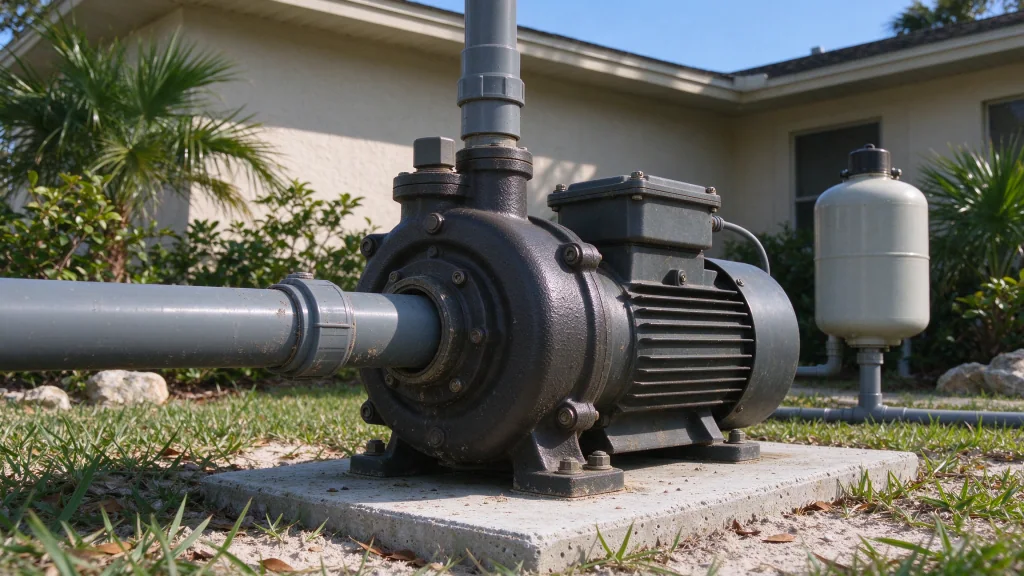
The equipment works from different positions
A surface jet pump uses a jet arrangement and its connected piping to move water. The exact configuration matters. A shallow-well arrangement and a deeper two-pipe jet setup are different systems, even though both put the motor where you can see it. The location of the jet assembly and the operating water level affect what the equipment can deliver. Our jet pump repair service addresses that setup rather than treating every aboveground pump as interchangeable.
A submersible unit works below the water level and pushes water through its drop pipe toward the surface. Power reaches the motor through cable, while the wellhead arrangement protects and connects the installation. At Coastal Palm Bay Well Pump Repair, the first comparison is what well and delivery conditions the equipment must serve. A label such as shallow or deep is not enough to select the replacement.
Water level matters more than the depth label
Total drilled depth, resting water level, pumping water level and pump setting describe different measurements. A well may extend much deeper than the water surface or the installed pump. The lift and pressure required during operation depend on the conditions the pump actually works against. That is why a horsepower-for-horsepower swap can miss an unsuitable original selection or a changed operating requirement.
For a jet system, the vertical relationship to the pumping water level and the correct piping arrangement are important. For a submersible system, pump setting, required head, flow and suitable installation conditions matter. The well-system explanation connects those measurements. If performance fades during sustained use, also distinguish equipment duty from limited well yield; neither pump style can create groundwater that the source cannot supply.
The common symptoms overlap, but the investigation differs
A jet pump that loses prime may run without delivering useful water. Suction-side air entry or a valve that does not hold can interrupt normal operation without leaving an obvious spray outside the piping. A submersible system does not use that same surface suction arrangement. Its interrupted delivery may involve controls, cable, the pump or drop pipe. Symptoms still need testing; a humming or silent motor does not identify a single failed part.
Both arrangements can be affected by tank storage, pressure settings, leaks and downstream restrictions. The tank is not proof of which pump is installed. A failed tank can make either conventional system cycle excessively, while a supply limitation can affect delivery regardless of pump location. Compare submersible pump repair with loss of prime to see why one troubleshooting sequence cannot cover every installation.
What changes in the repair or replacement scope
Surface equipment is usually assessed where it is installed, although access and the condition of connected piping still matter. Belowground equipment can require retrieval. That adds questions about lifting access, pump setting, drop pipe, cable and the possibility of damaged or stuck components. An estimate should distinguish tests performed from the surface from work that requires the pump to be brought out.
A proposed conversion between designs needs its own explanation. Well dimensions and construction, the available electrical supply, pipe arrangements, required delivery and the pressure system may all affect feasibility. Do not assume a different pump style will fit the existing well or connect to every retained component. Our replacement page explains the selection questions, and the cost guide separates pump-only work from broader connected-system changes.
Changing pump styles also changes which components must work together. Existing controls, tank connections, electrical supply and the route from the well to the property need a compatibility review. A proposed conversion should explain those dependencies and the reason for changing the arrangement. Choosing from a product label alone leaves unanswered whether the new equipment can deliver the required water under the measured conditions.
Describe the installation before choosing equipment
If you can safely photograph the visible pump, tank and closed controls, those images help establish the arrangement. Available well records and previous invoices can supply details that a photograph cannot. Avoid opening electrical covers or disturbing sanitary seals to identify parts. Start with the supply affected and the operating symptom, then use the pump assessment or request service. The useful choice follows the actual conditions, rather than a promise that one technology solves every water problem.