First, establish what stopped the water
Coastal Palm Bay Well Pump Repair manages residential pump replacement around the diagnosed fault and the existing well system. An empty faucet does not tell you which part failed. Power can be interrupted, a pressure switch can stop calling for water, or a surface pump can lose its prime. A damaged drop pipe can let a running pump move water without delivering it to the house. We start with the symptom and the system arrangement, then work toward the cause. That keeps a repairable control fault from turning into an unnecessary pump replacement.
For a home with no water from the well, useful findings include supply voltage, control response, pump current and the pressure gauge reading. Those measurements belong together. A motor drawing current is not proof that water is reaching the building, and a silent motor is not automatically beyond repair. Our repair-or-replace guide explains how those findings change the decision.
When replacing the pump makes sense
Replacement becomes a practical choice when testing identifies a failed motor or a damaged pumping assembly, when the pump cannot deliver its required performance, or when a repair would leave significant damage unresolved. The decision also depends on equipment condition and access. Pulling a submersible assembly exposes pipe, cable and connections that cannot be assessed fully from the surface. A sound recommendation explains which part has failed and what evidence supports that conclusion.
A poor result from an older system may still have a limited cause. A failed switch, leaking fitting or damaged tank does not by itself condemn the pump. If the pump starts and stops rapidly, pressure tank replacement may be the relevant branch. If it hums without starting, the motor, starting components and electrical supply need to be distinguished. Compare the possible causes in our humming pump guide.
Jet pumps and submersible pumps need different work
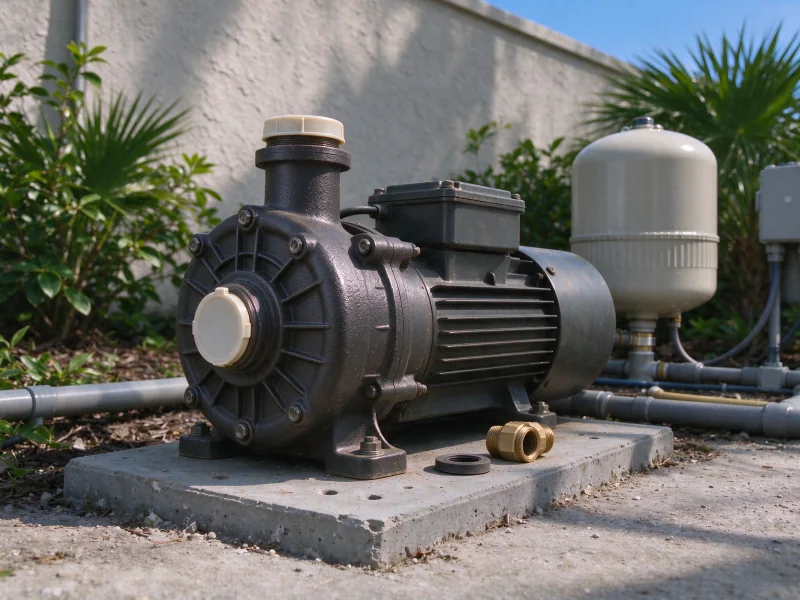
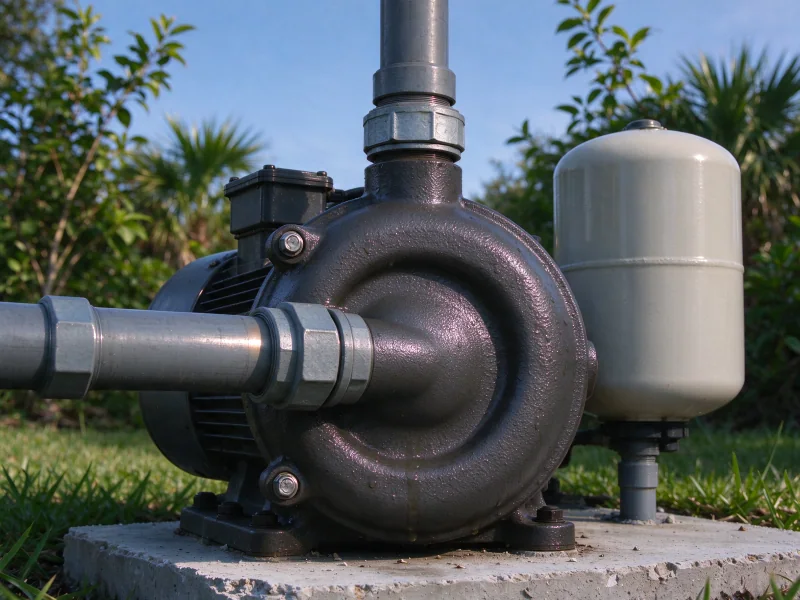
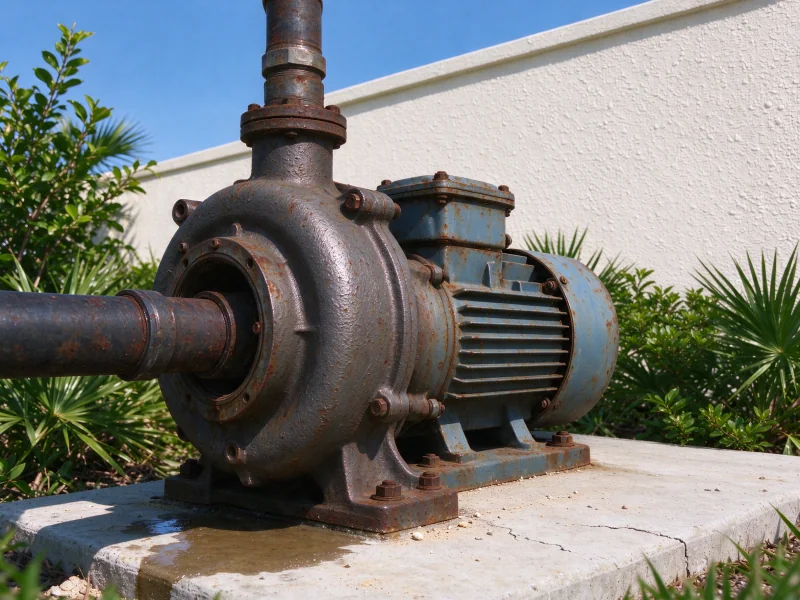
A jet pump has its motor and pumping assembly above ground. Its suction arrangement, priming condition and jet configuration affect what it can deliver. A leak on the suction side can admit air without leaving a puddle. Replacing that pump while leaving the leak in place can reproduce the same failure. Jet pump repair therefore includes a different diagnostic path from pulling a pump out of a well.
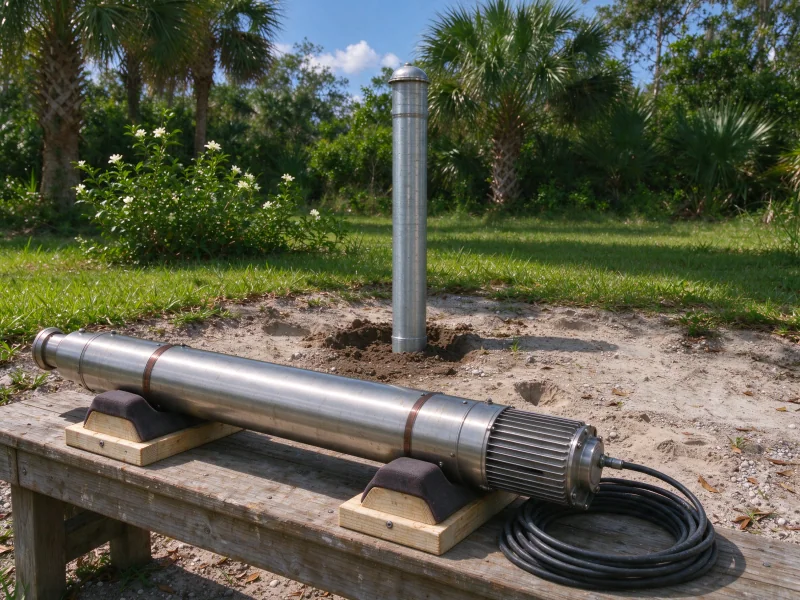
A submersible pump sits below the water level. Replacement involves access to the well opening and retrieval of the pump and its connected assembly. The condition and length of the drop pipe, cable and fittings influence the job. Submersible pump service should account for the entire assembly being handled, including what will be reused and what testing supports that choice. A proposal should identify these differences instead of offering one generic replacement package.
Match the pump to the water level and the job
Well depth and pump setting depth are different measurements. The well extends to its completed bottom; the pump is installed at a chosen position within the usable system. The vertical lift that matters during operation is tied to the pumping water level and the delivery point, together with the required discharge pressure and pipe losses. Two wells with the same completed depth can require different pump selections.
Horsepower alone is not a specification. The replacement needs a suitable flow rate at the required total head, and the well must be able to supply that flow. More capacity can draw the water level down faster when source yield is limited. Our guide to pump trouble versus low well yield explains why a larger motor cannot create groundwater. Existing well records and measured operating conditions are more useful than guessing from a nearby property.
Keep the tank, switch and replacement pump compatible
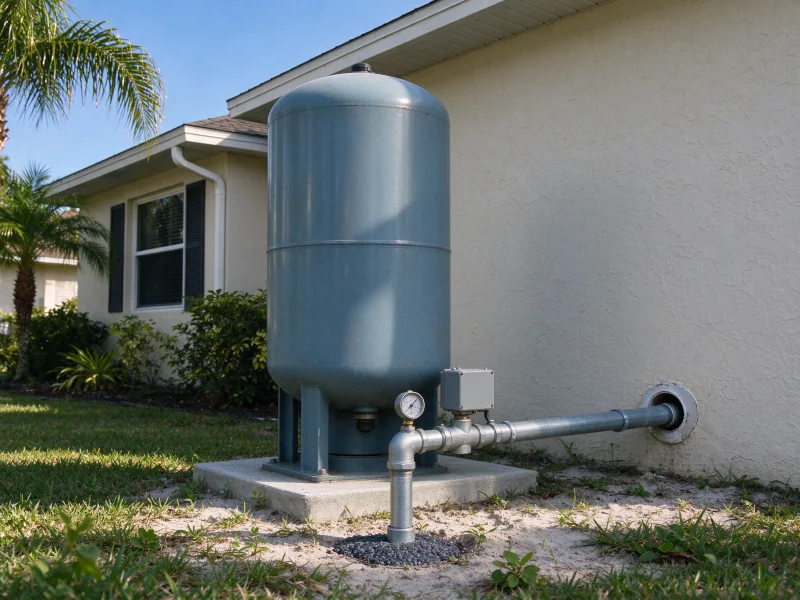
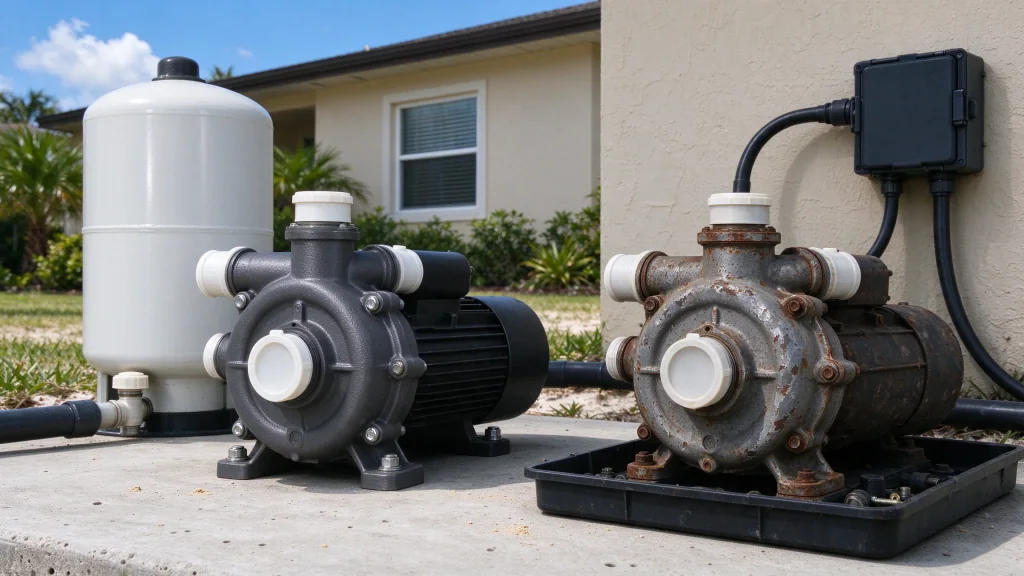
The pump works as part of a pressure system. In a conventional arrangement, the switch starts the pump at a lower pressure and stops it at an upper pressure. The tank supplies usable stored water between those points. A replacement that ignores tank condition or control settings may leave the new motor cycling excessively or struggling to reach the shutoff pressure.
We plan the equipment around the control arrangement already present or the specific changes being proposed. That may include checking tank precharge under the correct drained conditions, verifying switch settings and inspecting appropriate protective controls. Well pump controls and tank sizing deserve their own decisions. Do not raise pressure settings or fit a larger pump simply to compensate for a restricted line or a failed tank.
What a replacement scope should explain
A useful scope identifies the diagnosed problem, the proposed pump and the work needed to connect it to the existing system. It should explain access, electrical compatibility and the condition of parts being reused. Where equipment must be pulled, there should be a clear way to handle additional damage discovered during retrieval. An estimate cannot honestly promise that buried or submerged parts are sound before they have been assessed.
Before a visit, gather the equipment model information and previous service records if you have them. Tell us whether the pump supplies household water, irrigation or both through separate arrangements. Keep the route to the equipment accessible without moving heavy equipment or exposing electrical parts yourself. Our replacement process guide describes the sequence from assessment to operating checks.
Palm Bay groundwater conditions still need property-level evidence
The St. Johns River Water Management District identifies the surficial aquifer as an important water source in Brevard County and explains that groundwater levels can fluctuate. That matters when symptoms change with extended pumping or dry conditions. It does not establish the depth, yield or pump type at your property. We use the actual system information rather than treating a regional description as a specification.
Florida also distinguishes pump equipment work from well construction in its statutory definitions. That does not settle every plumbing or electrical requirement for a particular replacement. Changes involving the casing or other structural well components need separate review. See the Florida pump and well permit guide for the distinction, including why a pump replacement should not automatically be described as drilling or rebuilding a well.
Compare the scope, then verify the finished system
The price depends on the pump duty, retrieval difficulty, pipe and cable condition, electrical work, controls and any tank work included. A surface pump replacement and a deep retrieval are different jobs even when both restore household water. Our well pump cost guide separates the items to compare. A low headline price tells you little if it omits the failed part or assumes that all existing connections can be reused.
After installation, the system needs operating checks appropriate to its design. Those can include pressure recovery, switch response, current draw, delivered flow and leaks. A successful start is only one observation. For a domestic well, mechanical performance also does not establish drinking-water safety. Testing after pump repair is a separate question, especially when the well has been opened or affected by flooding. We explain the findings and proposed next step so you can make the replacement decision with a clear scope.