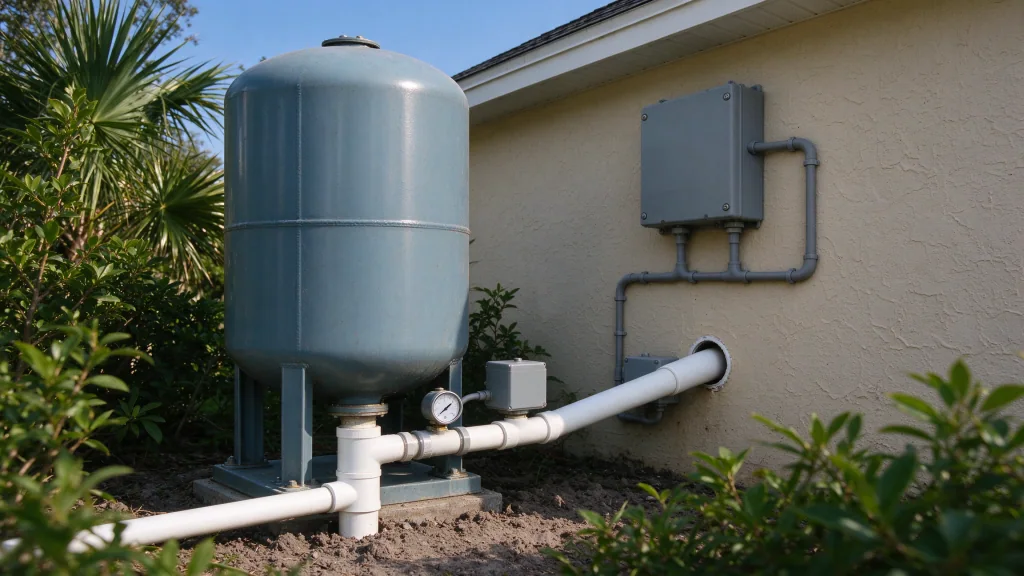
Do not leave a stalled pump energized
A humming well pump that does not start needs assessment of its supply, controls and motor. A bad starting component is possible, but the sound alone does not prove it. Coastal Palm Bay Well Pump Repair recommends stopping repeated start attempts and arranging diagnosis before heat or further damage complicates the fault.
Use a normal disconnect only if it is dry and safe to reach. Do not open energized controls, handle capacitors or try to turn a motor by hand. Keep away from wet electrical equipment. If the breaker also trips, follow the recurring breaker-trip guidance and leave the circuit for professional assessment.
First establish what is making the noise
A sound near the well equipment may come from a surface-mounted motor, a relay or another control component. A submersible motor is down the well, so noise heard at an external box does not automatically describe what that motor is doing. Location and timing are useful clues when reported accurately, without opening the enclosure.
Tell the contractor whether the noise begins when water is used, follows a controller command or continues after demand stops. Say whether the pump ever begins delivering water and whether the sound is new. The well system overview can help identify the visible components so you can describe the location rather than guessing the failed part.
Why a capacitor is only one possibility
Some pump motors use starting components that help them begin rotating. Failure in a compatible capacitor, relay or related circuit can prevent a normal start. Other systems have different designs, including motors without a separate accessible control box. A part that looks similar is not sufficient evidence of electrical compatibility.
Low supply voltage under starting load, damaged wiring, a motor fault or a mechanical problem can also be involved. Well pump controls diagnosis should identify the equipment and test the relevant circuit before selecting a replacement component. Replacing a starting part without checking why it failed can leave an underlying fault unresolved and produce another failed start.
Surface and submersible investigations differ
On a surface jet pump, the motor and pump assembly are accessible, but that does not make live electrical troubleshooting suitable homeowner work. The suction side and prime also require attention. A motor may run yet fail to move water if the pump has lost prime; that is a different condition from a motor that never reaches operating speed.
For jet pump repair, describe whether you hear a steady running sound or only a stalled hum. The losing-prime guide explains the hydraulic distinction. For submersible pump repair, accessible electrical and control tests may help determine whether pulling the pump is justified. The test sequence should follow the installed system.
What changed before the failed start?
An outage, recent repair, long idle period or new control component can narrow the investigation. None establishes the cause by itself. If the problem began after electrical work, provide that information even if other appliances work. A pump's starting condition can differ from a lightly loaded household circuit.
If it followed a storm, mention whether the equipment was wet or the wellhead was flooded. The after-outage guide separates restored utility power from equipment readiness. Do not repeatedly command an irrigation controller to run the pump as a test. If the property has more than one supply, identify which outlets have lost water using the house versus irrigation guide.
Ask for a repair that explains the symptom
The repair recommendation should name the fault supported by testing, identify the compatible replacement and describe any further checks needed. If a motor or complete pump is proposed, ask why an accessible control repair cannot resolve the measured problem. If a starting component is replaced, ask whether the motor then starts normally under its operating conditions.
A brief hum followed by water is still worth discussing if it is a new pattern. Conversely, age alone is not proof that the whole system needs replacing. The repair versus replacement guide weighs condition and scope. Keep the final component details with the equipment record so a future service visit can establish what was installed and why.