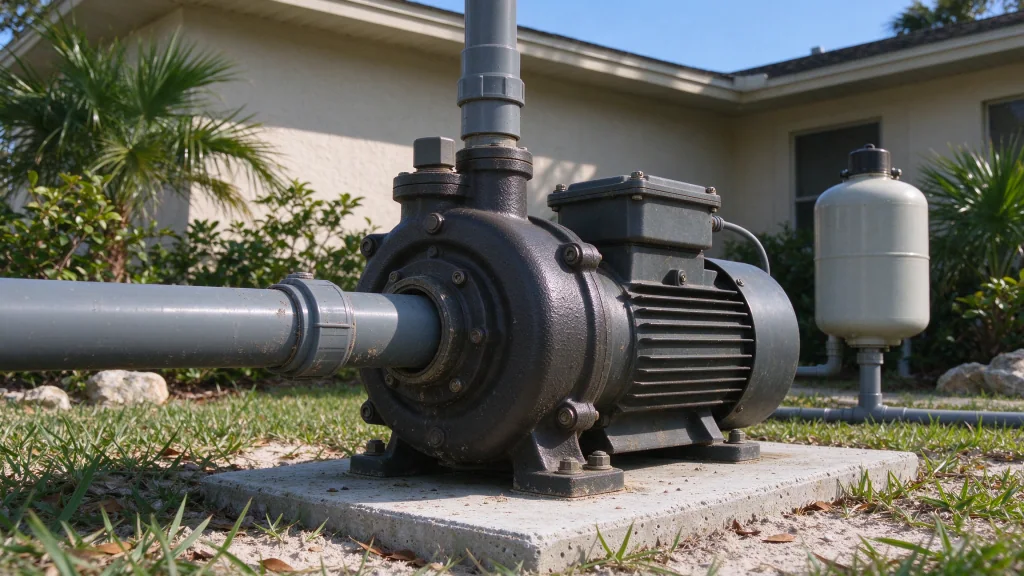
Prime is part of how a jet pump moves water
Coastal Palm Bay Well Pump Repair explains loss of prime as a hydraulic problem, even when the first noticeable symptom is a running motor and no water. A surface jet pump depends on water in the appropriate pump and suction passages to establish its operating flow. When those passages contain too much air, motor operation alone cannot establish normal delivery.
The exact arrangement matters. Jet systems can use different ejector and pipe configurations, so a repair should begin by identifying the installed equipment. The jet versus submersible guide explains why a diagnosis for a surface pump does not transfer directly to a submerged unit. Do not assume every well pump needs homeowner priming or that one generic procedure fits every jet system.
Why a suction leak may leave no puddle
On the suction side, the operating conditions can draw air inward through a joint, seal, or damaged pipe. That opening does not have to release a visible stream of water while the pump runs. A fitting can appear dry while still interfering with the ability to maintain a continuous water path. This is why looking around the pump for wet ground is only an observation, not a leak test.
Air entry can cause erratic delivery, sputtering, or reduced ability to build pressure. Those symptoms also have other causes, so the technician needs to establish where air is entering and under what condition. The suction leak repair page follows that diagnostic path. Replacing the pump without checking the suction line can leave the same air entry point connected to the new equipment.
Valves and loss of prime after a rest period
A foot or check valve can help retain the water column when the system stops. If it fails to hold, water may drain back and the next start begins under different conditions. A system that works after service but loses prime overnight suggests a different pattern from one that loses delivery during an extended draw. The timing helps choose the test; it does not prove a particular valve has failed.
Pressure loss may also come from another leak or connected demand. An inspection should distinguish water draining toward the well from water being consumed or escaping elsewhere. The short cycling guide covers how that same loss can trigger repeated starts. Valve location and accessibility affect the repair scope, so an estimate should explain what component is being tested and what access it requires.
Water level and pump limitations also matter
A sound suction path still has to operate within the capabilities of the pump and well arrangement. If pumping conditions change enough that water cannot be supplied as required, the pump may lose stable delivery. The resting water level is only one part of the picture. The level while pumping and the rate of recovery help explain what happens during sustained use.
The well yield guide explains why a resting supply that looks adequate can behave differently under demand. A new pump with greater nominal output does not automatically solve that limitation. The right question is whether the proposed equipment is suited to the actual source conditions and demand, rather than whether the motor rating is larger.
Respond without repeatedly running the pump dry
If the motor runs but useful water delivery is absent, avoid repeated restart attempts. Do not keep adding water and restarting an unidentified system in the hope that it eventually holds. Do not remove electrical covers, bypass controls, or reset a breaker repeatedly. Arrange diagnosis and describe whether the problem follows an overnight rest, a long watering period, or recent work.
Useful information includes the pump model if its label is safely visible, which uses are connected, and whether water pressure disappears before or after the motor starts. Jet pump repair can then focus on the actual configuration. If there is no water anywhere, the no water diagnostic page helps organize other possibilities such as a control or power problem that can resemble a priming issue.
What holding prime should demonstrate
A completed repair should address the reason water was lost from the arrangement. That might mean correcting an air entry point, restoring valve function, or identifying operating conditions the current system cannot support. A brief flow check immediately after filling the pump does not establish that it will retain prime through the next shutdown and restart.
Ask how the system behaved during normal demand and after a suitable stopped period, and whether pressure remained stable without unintended use. Ongoing well pump maintenance can document developing changes before they become a no-water event. If replacement is recommended, the repair or replace guide helps distinguish a damaged pump from a suction problem that would remain after replacement.