Build maintenance around the system you actually have
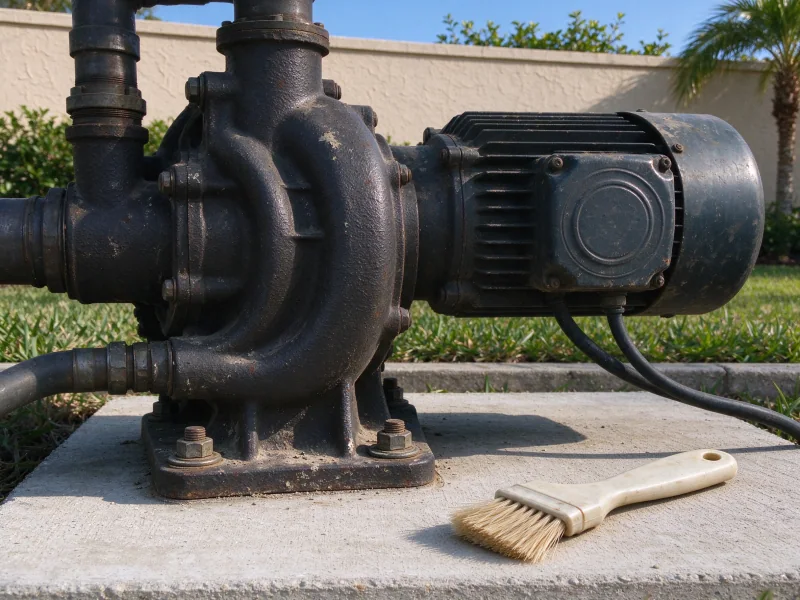
Coastal Palm Bay Well Pump Repair offers maintenance planning and condition checks for existing residential pump systems. A useful visit starts with the equipment installed, its service history and any change in the way it operates. A surface jet pump, a submersible installation and a pressure tank have different inspection needs. A single generic tune-up checklist can miss the problem that matters at your home.
Maintenance helps identify conditions that deserve attention, but it cannot prevent every failure or guarantee a particular equipment lifespan. We focus on understandable findings and practical next steps. If water has already stopped or the motor is behaving abnormally, describe that as an active fault through our no-water service. Diagnosis of a current breakdown should be scoped separately from routine condition checks.
Know the normal operating pattern before it changes
Useful records describe how the system behaves during ordinary water use. Pressure at rest, pressure under demand, approximate cycling behavior and changes noticed at fixtures can give a contractor context. The aim is a meaningful baseline for your equipment, not a set of universal numbers applied to every well. A different pump, tank or control arrangement can legitimately operate differently.
Owners can note unusual sounds, visible leakage and whether the pump starts when no water is intentionally being used. Those observations should not require opening electrical covers or changing settings. The guide to well pump operation explains the relationship between pumping and stored water. Bring the record when requesting a well system inspection, especially if a symptom comes and goes.
Protect useful drawdown rather than chasing tank size alone
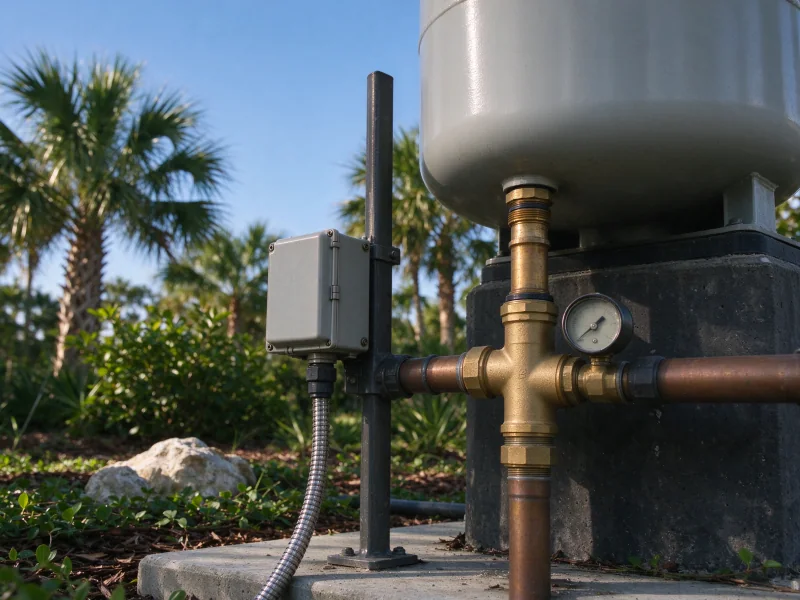
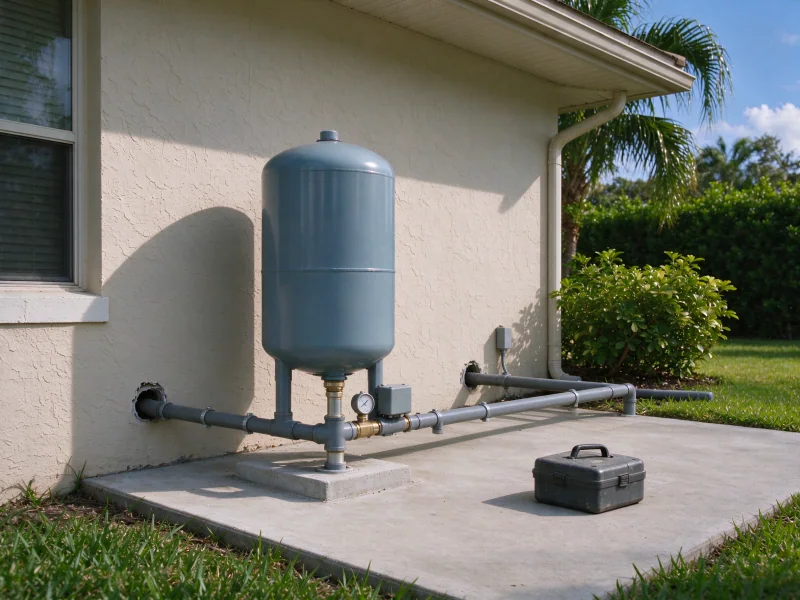
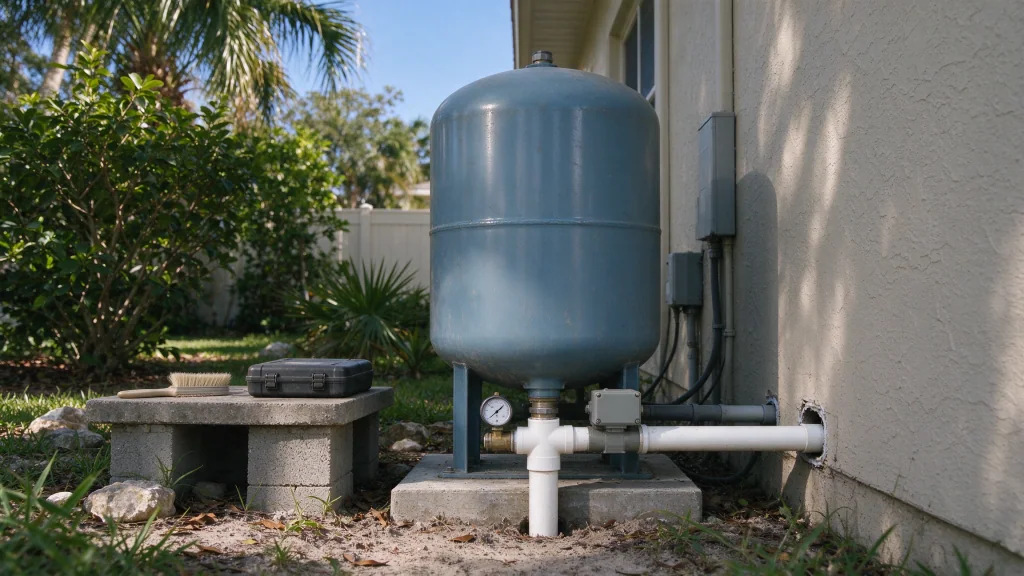
The tank's job includes supplying stored water between starts. Loss of useful drawdown can cause frequent cycling and make pressure feel unstable. An assessment should consider the tank condition together with leaks, switch behavior and water demand. Simply reading the gallon capacity on the label does not establish how much usable water leaves the tank during its normal operating range.
Precharge checks require suitable preparation and reference to the installed equipment and settings. They are not a reason to add air blindly or use a universal pressure target. Our pressure tank sizing guide explains why nominal capacity and drawdown differ. If the tank is defective, replacement becomes a defined repair rather than a maintenance adjustment repeatedly applied to a failed component.
Investigate changing starts and extended running
A pump that begins starting more often may be responding to a leak, reduced tank drawdown or a control problem. A pump that runs longer may face different demand, a restriction, declining pump performance or a source limitation. These patterns deserve comparison with the normal system behavior. Neither pattern proves that the motor needs replacement by itself.
Our short-cycling guide and continuous-running guide explain the different investigations. Where controls are involved, control assessment should identify the fault before settings or parts are changed. Electrical measurements and work inside control equipment belong to appropriately qualified contractors. Repeatedly resetting a tripping breaker is not a maintenance method.
A jet pump needs a sound suction arrangement
A jet pump relies on a suitable suction path and operating water level. A connection can admit air without leaving a wet patch, and a valve can allow drain-back after shutdown. Repeatedly restoring prime may temporarily restore delivery while leaving the cause unresolved. Maintenance observations should include whether prime is retained and whether the behavior changes after the system sits unused.
For those symptoms, suction leak repair or jet pump diagnosis may be the next step. The installed suction arrangement matters, so an unknown well depth should not be replaced with a guess. Tightening every fitting can also damage components or leave a strained connection in place. A targeted repair should address the identified defect and then check operation under relevant conditions.
Do not turn routine maintenance into unnecessary retrieval
A submersible pump sits below the water level, so much of its condition cannot be established by looking at equipment aboveground. Accessible operating information, control behavior and delivery can guide an assessment. Pulling the pump is a separate intervention with different handling, access and sanitary considerations. It should follow a reasoned scope rather than be treated as an automatic annual task for every system.
The drop pipe, cable and check-valve arrangement also affect delivery. Symptoms may justify submersible pump repair assessment, but replacing submerged equipment without establishing the cause can leave an upstream or downstream problem unresolved. The repair-or-replace guide explains how condition, fault location and the surrounding equipment inform that decision.
Recognize when the source needs a different investigation
If water starts strong and fades during sustained demand, document how long the system ran, what was being used and whether it recovered after resting. That pattern can arise from source limitations as well as equipment faults. A maintenance visit may identify the need for further testing, but it should not automatically label the well dry or recommend a larger pump.
Brevard groundwater conditions can vary, including fluctuations in the surficial aquifer. Regional conditions do not establish the water level or construction at an individual property. Our pump-versus-low-yield guide explains the distinction. Reducing unnecessary simultaneous demand may change the symptom, but it does not establish which component or source condition needs attention.
Protect the well opening and plan water testing separately
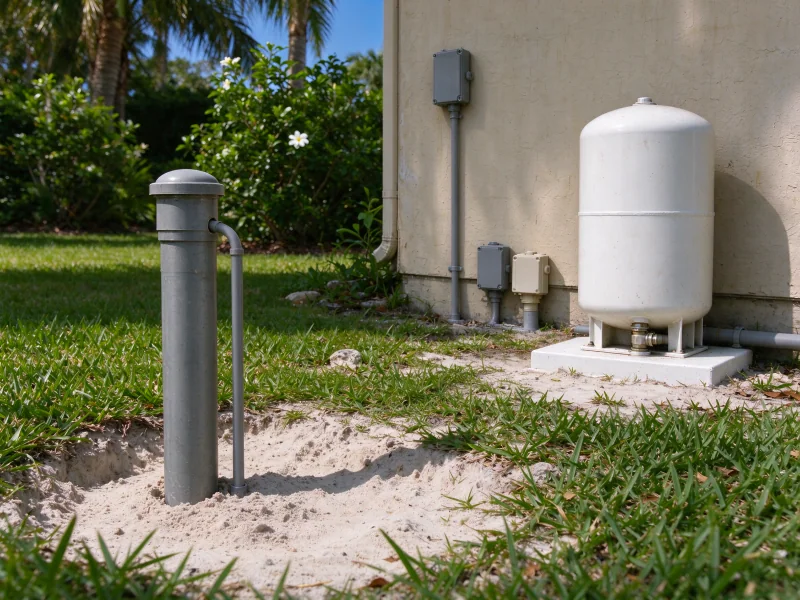
Keep the wellhead accessible for assessment and avoid storing materials against it. A damaged cap, exposed opening or runoff collecting around the well deserves attention. Visible condition checks have limits; they do not verify every buried seal or internal part. Avoid opening the well or adding disinfectant as an improvised substitute for a defined sanitary procedure.
Florida Department of Health guidance for Brevard private well owners recommends annual coliform bacteria and nitrate testing and lead testing every three years for most owners. Those laboratory checks answer questions that motor operation cannot. The water-testing guide describes that separation. After flooding, follow health guidance on disinfection and testing after water recedes; restored pressure alone does not establish safe drinking water.
Agree on the maintenance scope and record the result
Use the manufacturer's guidance, equipment condition and service history to plan the next checks. We do not invent a mandatory pump-service interval that fits every residential installation. A useful record identifies the equipment, observations, measurements actually taken, repairs recommended and limitations encountered. Any parts replacement or additional testing should be clear before the maintenance visit becomes a larger repair.
Pricing depends on access and the agreed checks. It should distinguish a condition assessment from laboratory services, electrical repairs or pump retrieval. Our repair-cost guide explains why scope matters more than an unsupported citywide average. Use the contact page to share the pump type, recent symptoms and available records so the proposed work fits your system.