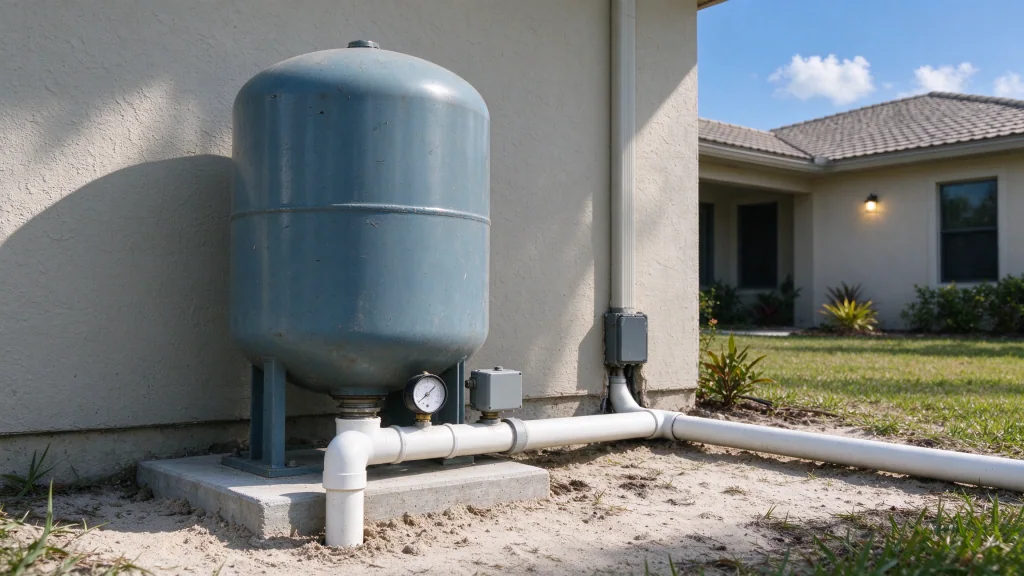
Start with the pattern, not a tank order
Coastal Palm Bay Well Pump Repair starts this explanation with a useful distinction: short cycling describes what the system does, not which part failed. A pump normally starts when pressure falls to its starting point, supplies water, then stops when the stopping point is reached. The pressure tank provides a usable volume between those events so the motor does not have to respond to every small draw.
If the motor starts after a small amount of water and stops almost immediately, the system may have lost that usable volume. If it starts with every fixture shut, water may be leaving the pressurized system. Both patterns can occur together. A worn tank can exaggerate a small leak, and replacing the tank alone can leave the leak behind. The pressure tank replacement decision should follow that distinction.
How tank trouble causes rapid cycles
A tank stores water by compressing an air cushion. In a bladder or diaphragm tank, the separator keeps that air and water apart. Loss of air charge, a damaged separator, or an unsuitable relationship between the tank and controls can reduce the amount of water delivered before the next pump start. The pressure gauge can then travel quickly between the control points even during a modest draw.
The label on a tank gives nominal capacity, which is different from usable drawdown. A large-looking tank can deliver little usable storage when it is not operating correctly. Our tank sizing guide explains why choosing a replacement by exterior size alone misses the engineering question. Charge checks require the appropriate drained and isolated condition, using the tank and control instructions. A reading taken while the water side remains pressurized does not establish the intended precharge.
Cycling when no one is using water
A pump that starts during a period of no intended use deserves a check for hidden demand. A toilet valve, irrigation branch, underground line, or other connected use can draw water without someone standing at a faucet. A leaking check or foot valve can also allow pressurized water to move back toward the well. The location of the loss matters because the repair may be inside the property plumbing, in the suction arrangement, or below ground.
A technician can compare pressure behavior with parts of the system isolated through suitable existing valves. That work needs care because trapping a pump against a closed path can create a different problem. Homeowners can record whether the gauge falls and which ordinary fixtures were in use, without changing valves or control wiring. For a surface jet arrangement, the suction leak repair page describes another reason the system may lose stable operation.
Separate true cycling from control chatter
A motor repeatedly completing short runs differs from a switch chattering rapidly. Contacts, a restricted pressure sensing passage, or a pressure response near the switch can cause erratic control action. A gauge that responds slowly may also give an incomplete picture. The test needs to connect actual pressure, switch response, and motor operation rather than interpreting a sound alone.
Changing the switch settings to make the starts less noticeable can conceal the symptom without restoring storage. A higher stop pressure may ask more from the pump than it can produce under the existing conditions. The pressure switch settings guide explains why the tank, pump capability, and controls have to agree. Electrical inspection belongs with qualified service; do not open live covers or hold contacts closed.
Useful observations before service
Record whether the cycle occurs with a single fixture open, only with a larger draw, or with everything apparently off. Note whether the pressure rises and falls quickly or the motor merely clicks without establishing flow. Mention recent tank work, an outage, a changed irrigation schedule, or a new pressure setting. These observations make a well system inspection more focused without turning a homeowner into the test instrument.
If short cycling develops into constant running, the changed behavior matters. It may mean demand now exceeds delivery, pressure cannot reach the stopping point, or controls are behaving differently. If water delivery stops, use the no-water diagnostic page to organize the symptom. Avoid repeated breaker resets, repeated restart attempts, and continued operation when the pump may be running without water.
What a complete correction should demonstrate
After the cause is corrected, the system should show a sensible relationship between the water being drawn, pressure change, and pump operation. A successful result is more than a quieter switch. It should address the loss of storage or water that caused the repeated starts, and identify any remaining concern that belongs to another part of the system.
Ask what was measured and why the chosen repair addresses those findings. A tank recommendation should explain usable storage and compatibility. A valve repair should explain the pressure loss. A controls repair should explain the mismatch between sensed pressure and motor action. That evidence helps avoid replacing several components simply because they share the same symptom.