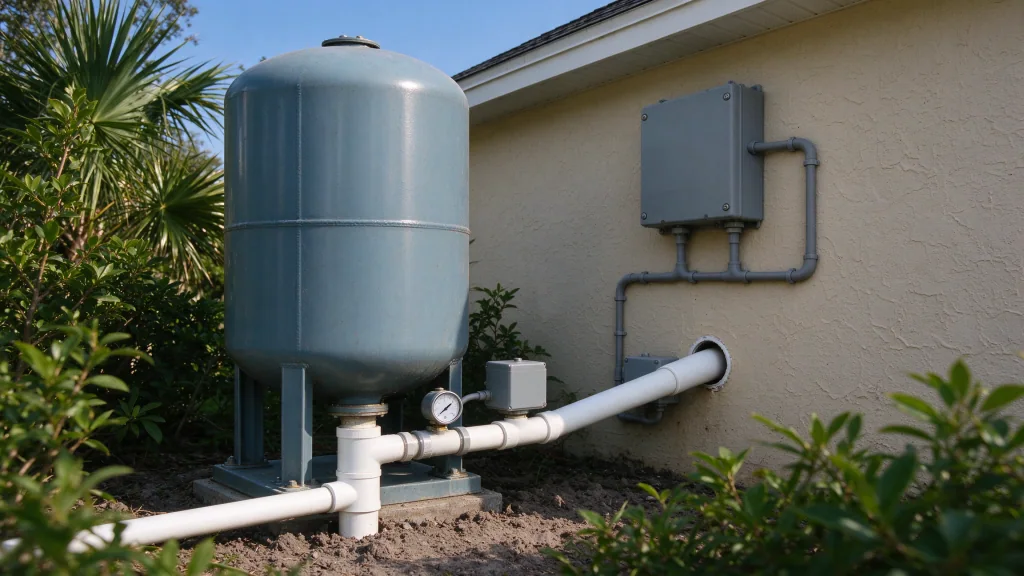
There is no universal correct setting
A well pump pressure switch should start and stop the pump at pressures compatible with the pump, tank and plumbing. Raising its settings can cause new problems if the pump cannot reach the stopping pressure. Coastal Palm Bay Well Pump Repair recommends diagnosing the delivery problem before treating adjustment as the repair.
The switch responds to pressure where it senses the system. It does not measure how much groundwater the well can supply, how freely a filter passes water or whether a shower valve is restricted. If one fixture is weak while others work normally, changing the whole system's pressure is a poor starting point. The pressure versus flow guide explains why the gauge and the faucet can tell different stories.
What cut-in and cut-out actually control
Cut-in is the pressure at which a conventional switch calls for the pump to run. Cut-out is the pressure at which it tells the pump to stop. Between them, the pressure tank can deliver stored water according to its usable drawdown. These terms describe a conventional pressure-switch arrangement; a variable-speed controller may regulate the system differently.
The stopping pressure must be achievable under the installed operating conditions. A worn pump, low pumping water level, suction problem or leak may prevent the pressure from climbing as expected. Increasing cut-out in that situation can extend operation without improving delivery. If the motor runs constantly, determine whether the switch is receiving accurate pressure information and whether the hydraulic system can meet its target.
Tank precharge is a separate measurement
Air precharge is the tank's air-side condition under the manufacturer's specified test conditions. It is not the same as the water pressure seen while the pump is operating. Measuring it correctly generally requires isolating and draining the tank as directed for that equipment. A reading taken against pressurized water can lead to the wrong conclusion.
The relationship between precharge and operating settings affects usable storage and cycling. A failed bladder, unsuitable tank size or incorrect air condition cannot be reliably solved by turning a switch adjustment. Our pressure tank sizing guide covers drawdown and run time. A pressure tank replacement assessment should establish why the existing tank is not doing its job before selecting another one.
Use the symptom to choose the next test
A gauge that rises and falls rapidly with a small amount of water use suggests a cycling problem, but it does not identify the failed part. A pressure reading that remains high while fixture flow is poor points toward a different investigation. A gauge stuck at one value may itself be unreliable. Observations should be compared with a known operating condition rather than treated as a diagnosis on their own.
For low well water pressure, record whether the problem affects every outlet, whether it changes during sustained use and whether irrigation is running at the same time. For short cycling, note the approximate pattern without deliberately forcing repeated starts. Those details help distinguish storage trouble, control sensing trouble and demand beyond the system's practical capacity.
What a defensible adjustment includes
Pressure switches contain electrical connections. Do not remove an energized cover, bridge contacts or turn adjustment hardware while the equipment is live. Burned contacts, wet controls and a recurring breaker trip require diagnosis, not a higher setting. Keep away from damaged equipment and use a normal disconnect only when it is dry and safe to reach.
An assessment of well pump controls can compare gauge accuracy, switch operation, pressure sensing, tank condition and the pump's ability to build pressure. The contractor should explain the proposed operating range and confirm compatibility with the installed equipment. Where a different controller type is involved, its manufacturer's setup procedure takes precedence over advice for a conventional mechanical switch.
Keep the final settings with the equipment record
After authorized work, ask for the operating settings, the relevant tank information and the reason for any change. A useful handover records what the system did before and after the adjustment, including whether the pump stopped normally under the tested conditions. That gives a future diagnosis a factual starting point.
If the suggested answer is a more powerful pump, ask which measurement supports that choice. Horsepower alone does not establish adequate source water, suitable pipe capacity or the right duty point. The repair or replace guide helps frame that decision. A setting change is successful when it fits the whole system and resolves the measured problem, rather than merely moving the gauge needle.