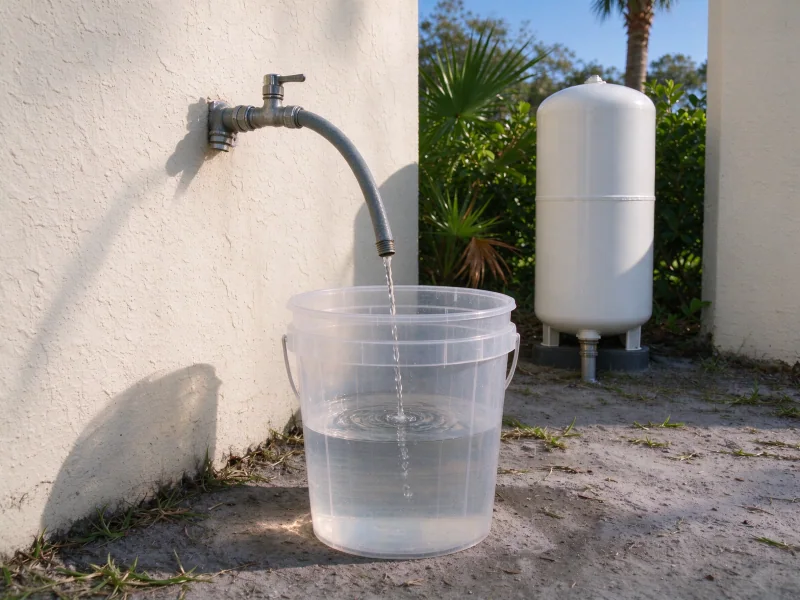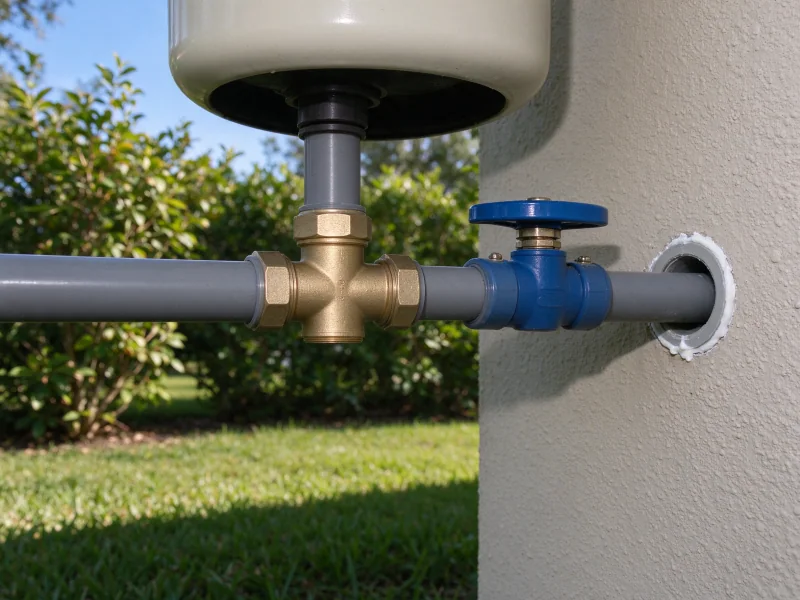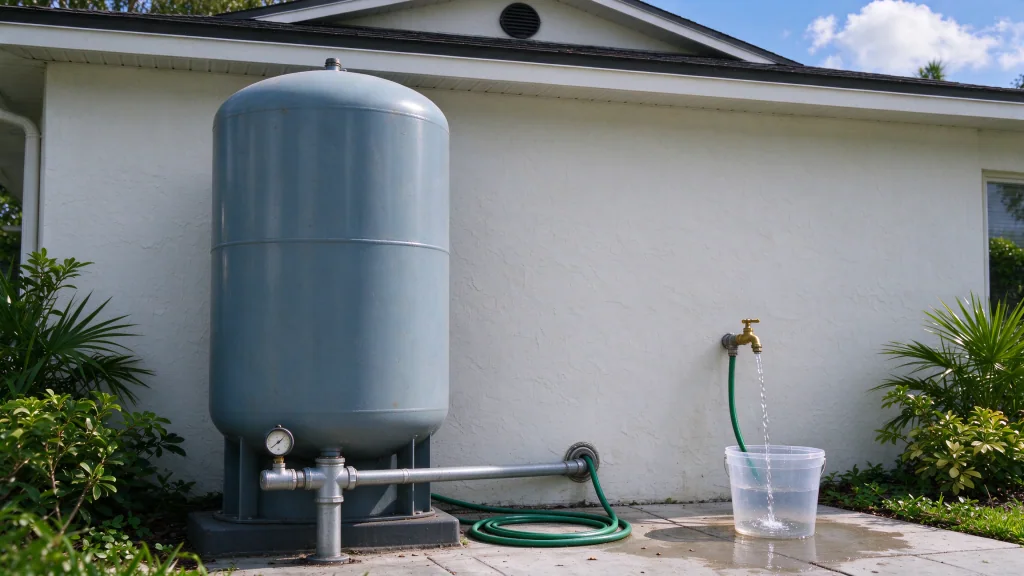
Find where useful water delivery is being lost
Coastal Palm Bay Well Pump Repair offers low well water pressure diagnosis for existing residential systems in Palm Bay. The useful question is not simply whether the gauge number looks low. We need to establish where delivery falls short and what happens when water is being used. Good pressure with everything closed can coexist with poor flow at an open fixture. Replacing the pump before making that distinction can leave the shower unchanged.
Tell us whether the problem affects every outlet or one particular fixture. A single clogged aerator belongs to a different investigation from weak water throughout the house. Note whether the change was sudden or gradual and whether the water fades only after sustained use. Those observations help frame an assessment; they do not identify a failed component by themselves. If the supply has stopped completely, use our no-water service to describe that different condition.
Pressure, flow and source yield are different measurements
Pressure is the force present at a measured point. Flow is the amount of water moving over time. Well yield concerns the source's ability to supply water under the test conditions. A tank stores some usable water between pump starts, but it does not increase the formation's ability to replenish the well. Confusing these jobs makes it easy to recommend the wrong equipment.
For example, a restricted line may allow pressure to recover when taps are closed, then cause delivery to collapse under demand. A source limitation can provide a strong initial supply before the pumping water level falls. Our pressure-versus-flow guide explains those patterns. The assessment needs measurements taken under useful operating conditions, rather than a single gauge photograph treated as a complete diagnosis.
Compare the pump side with the water reaching the house
A meaningful investigation considers pressure and delivery at suitable points in the system. Where accessible, comparing the pump or tank side with the downstream supply can reveal whether the loss occurs after the equipment. Closed valves, restricted treatment equipment and damaged pipe can all affect what reaches the home. They should not be overlooked merely because the pump is the most visible machine.
The pressure gauge also needs to be plausible. A damaged or obstructed gauge can mislead the assessment. We consider the reading alongside pump operation and delivered water. A well system inspection can help establish the arrangement when records are missing or the equipment has been altered over time. Further tests are chosen for the observed fault, rather than performed as an unexplained list.
Watch what happens between pump starts
A pressure tank helps the system deliver stored water while the pump is off. When usable drawdown is lost, pressure may change rapidly and the pump may start frequently. That can feel like surging or unstable delivery even when the pump can produce useful flow. A leak or a control problem can create similar behavior, so the tank needs assessment in the context of the whole system.
If the tank is the confirmed fault, pressure tank replacement should address sizing, usable drawdown and the operating settings. The labeled gallon capacity does not describe how much water the tank releases during a normal cycle. Read about short cycling if repeated starts are the main symptom. A larger pump will not restore a failed tank's storage function.
A surface pump can lose performance through its suction path
A jet pump depends on its installed suction arrangement and the water level it must work against. Air entering a connection can interfere with delivery without producing a visible water leak. A valve that allows drain-back can also change startup behavior. If the pump repeatedly loses prime, repairing the motor alone may leave the original problem in place.
Our jet pump service covers that equipment-specific investigation. Where the findings identify air entry, suction leak repair follows the affected connection, pipe or valve. We distinguish an equipment problem from a water-level condition before treating either as solved. Repeatedly restarting a pump that is hot and moving little water is not a substitute for finding the cause.
Water that weakens during use needs a source-level question
Water delivery that starts strongly and then fades may require assessment of drawdown and recovery. It can also have equipment explanations, so the pattern should guide testing rather than settle the diagnosis. The St. Johns River Water Management District describes fluctuating groundwater levels in Brevard's aquifers. That is relevant context, but it does not establish the depth or available water at your property.
Compare the possibilities in our pump fault versus low-yield guide. If the source cannot support the withdrawal rate, increasing pump capacity may draw it down faster. The recommendation may need to consider demand and available storage, or identify a separate well assessment. If the well itself is the limit, rehabilitation or drilling is quoted separately rather than folded into a pressure repair.
A replacement recommendation should name the required duty
A pump has to provide the required flow against the system's lift, discharge pressure and pipe losses. Horsepower alone is not enough to establish whether it is suitable. The pumping water level matters; total completed well depth is a different measurement. Existing model information helps, but it does not prove that the original equipment still matches the present demand.
If testing confirms a pump-performance problem, we explain why well pump replacement is appropriate and what should remain in service. A submersible installation has different access and retrieval considerations from an aboveground jet pump. A written scope should connect the proposed equipment to the measured requirement instead of presenting a bigger motor as a universal cure.
If electricity use rises without a comparable increase in water demand, compare measured runtime and pump performance before assuming ordinary aging. A leak, altered controls or reduced delivery can keep the pump running longer. The bill alone does not establish reduced motor efficiency or prove that replacement is needed.
Define the failed part before comparing repair prices
Low-pressure work can involve an accessible valve, controls, a pressure tank or equipment down the well. The access required and condition of connected parts change the expense. Ask whether the proposal includes diagnosis only, a specific repair or further investigation if the initial findings do not explain the complaint. Our cost guide separates these different scopes.
Before work proceeds, the estimate should identify the finding and the proposed correction. Where a tank or pump is retained, that should be clear. After the repair, compare delivery under the conditions that originally exposed the problem. A system that reaches pressure with all taps closed has not necessarily demonstrated satisfactory performance during use.
Describe the demand that exposes the problem
It helps to know whether the weak delivery occurs at a shower, during laundry, while irrigation runs or whenever more than one outlet is open. Also tell us about recent equipment changes and whether the house uses utility water while a separate well supplies the lawn. An irrigation-only pump problem should not be confused with a domestic water-supply failure.
You can provide information without dismantling equipment. Keep accessible labels and previous invoices available, leave electrical enclosures closed, and mention any flooding or recurring breaker trip. We manage the agreed work through appropriately licensed and insured contractors. Request an estimate with the symptoms you know; you do not need to choose a replacement part first.