First, establish which water supply stopped
Coastal Palm Bay Well Pump Repair diagnoses residential no-water well problems in Palm Bay. We begin with what has stopped receiving water and what the pump is doing. A quiet pump, a running pump with no delivery and a pump that repeatedly stops under load require different investigations. An empty faucet does not by itself prove that the motor has failed or the well has run dry.
Tell us whether the equipment supplies the house, irrigation or separate uses through different arrangements. Where a home uses utility drinking water and a private lawn well, those supplies can fail independently. Our house-water versus irrigation guide helps explain that distinction. It prevents a utility interruption from being misidentified as a pump failure before the equipment is even assessed.
Useful observations do not require opening an electrical box
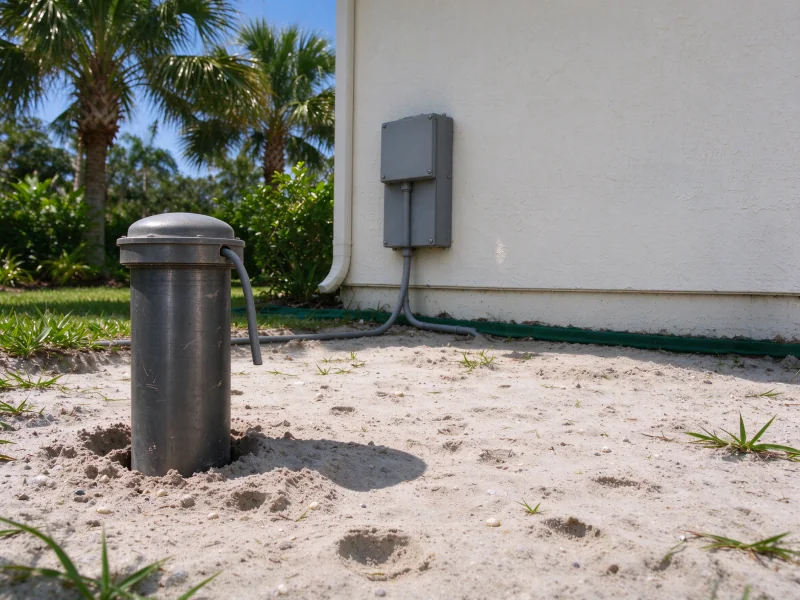
You can describe whether the motor is silent, humming, running steadily or starting repeatedly. Mention any visible gauge reading and whether water returned after the equipment rested. Existing labels and earlier invoices can help establish the arrangement. Take photographs only from a safe, accessible position; there is no need to remove covers or reach into wet equipment to gather information.
If the system is hot, damaged or running without delivering water, avoid forcing it to continue. Do not repeatedly reset a tripping breaker or bypass a pressure switch. Electrical testing belongs with the appropriate contractor. Read our breaker-tripping guide for the difference between reporting an observation and attempting an energized repair. Our guide to how well pump systems work shows how power, controls, pump, tank and source connect.
A silent pump needs its supply and controls assessed
A pump may not start because electrical supply is interrupted, because a control is not calling for water, or because a protective device has stopped operation. A failed motor is another possibility. These causes cannot be separated from the sound of silence alone. Suitable testing follows the electrical and control path while accounting for the equipment actually installed.
Not every well pump has the same external control box. Motor type and control arrangement determine which components are relevant. Our controls service covers that branch of the diagnosis. If the problem began with a power interruption, the outage guide explains the useful history to report. Restored power does not automatically mean that every connected component is operating correctly.
A running motor is not proof that water reaches the house
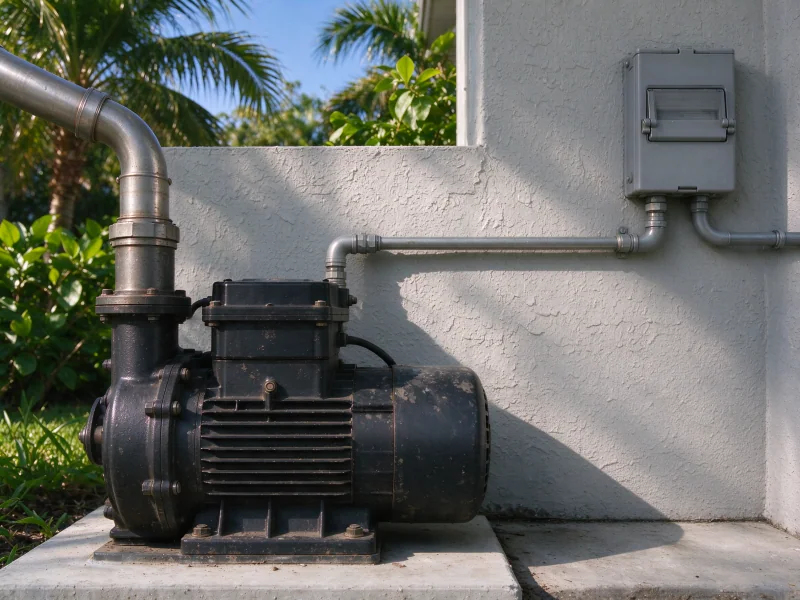
A motor can run while a surface pump has lost prime, while a suction connection admits air or while pipe damage prevents delivery. On a submersible system, the drop pipe and cable are part of the connected assembly. The fact that a motor draws current does not prove the pumping section is moving the required water to the surface.
We compare pump response with pressure and delivered flow before choosing a repair. Jet pump service considers the suction arrangement and operating water level. Submersible pump diagnosis must also consider components that cannot be seen from above. Pulling the pump is a defined access operation, not the first explanation for every loss of household water.
Repeated loss of prime points to a condition that needs finding
A surface pump depends on the water and air conditions its design requires. A leaking suction joint can draw air inward while running, and a valve that fails to hold can allow drain-back after shutdown. Neither condition necessarily creates an obvious puddle. Water-level changes or an unsuitable suction arrangement can also interfere with the pump's ability to establish delivery.
Repeatedly adding water and trying again may temporarily change the symptom without correcting the fault. Our loss-of-prime guide describes the mechanism. Where testing identifies an air-entry or drain-back problem, suction leak repair addresses the affected component. We keep that decision separate from replacing an otherwise serviceable motor.
Water that returns after rest does not settle the diagnosis
A well may provide initial water that fades during sustained withdrawal. After a rest, the supply may appear to recover. That pattern can indicate a source response that needs measurement, but intermittent equipment and control faults also deserve consideration. We use the timing and operating behavior to decide what evidence is needed, rather than declaring a dry well from one episode.
The St. Johns River Water Management District identifies fluctuating groundwater levels in Brevard. The actual well record and appropriate drawdown or recovery testing are still needed for a property-level conclusion. Compare pump failure with low well yield. Increasing pump capacity can worsen the imbalance when the source cannot replenish water at the rate being withdrawn.
The pressure system and downstream path can change the symptom
An apparent outage can involve the pressure tank, switch or a restriction after the pump. Rapid starts and stops differ from continuous running without useful delivery. A closed valve, obstructed component or plumbing failure can also stop water reaching the relevant outlets. That is why diagnosis considers the full delivery path instead of concentrating only on the pump housing.
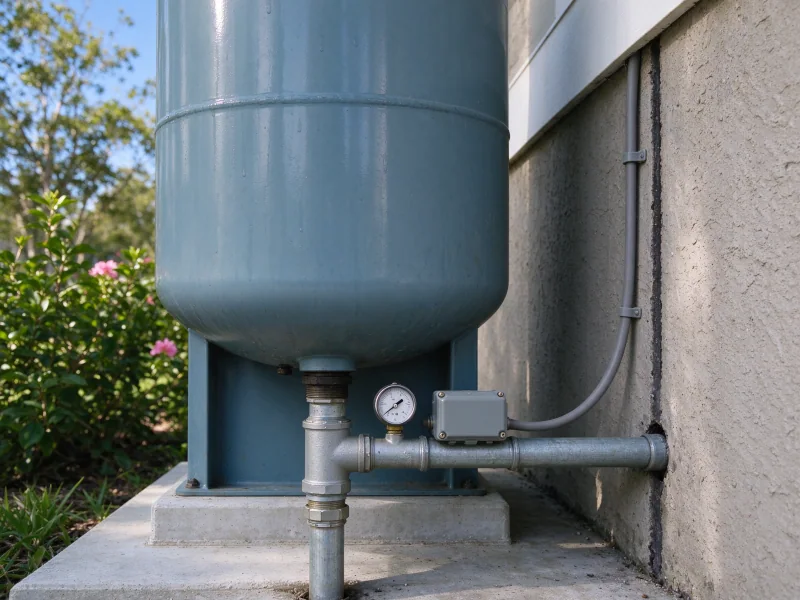
Our pressure tank service explains usable storage between starts. The low-pressure assessment covers a supply that is present but inadequate. A mechanical finding should connect the observed behavior to the proposed work. Simply changing the pressure setting does not repair a leak, remove a restriction or create water in the well.
A flooded well raises a separate drinking-water question
Tell us if floodwater reached the well or if equipment was submerged. Restoring the pump is not the same as establishing that a domestic water supply is safe to drink. Flood-affected wells may need disinfection and testing once floodwater recedes, following the applicable public-health guidance. Water that looks clear can still require laboratory analysis.
Our testing-after-repair guide explains that separate handoff. Opening the well during equipment work can also affect the sanitary-protection questions. The repair scope should identify the relevant completion steps rather than treating the return of pressure as the only condition that matters. We do not infer potability from appearance, odor or the sound of a working motor.
Choose the repair after the cause is supported
A no-water assessment may lead to an accessible control repair, a connection repair or a pump replacement. Other findings may point to the well itself and require a separate licensed scope. When the source is the problem, well rehabilitation, a replacement well or abandonment is scoped as separate licensed work; deepening an existing well is not offered. The finding should be explained before the customer is asked to choose equipment.
For a confirmed equipment failure, our replacement service accounts for the pump duty and connected components. The cost guide explains why a diagnostic pump pull, a switch repair and a complete installation are different purchases. We manage the agreed work through appropriately licensed and insured contractors, with the applicable trade responsibilities identified.
Bring the history you have, without guessing a failed part
When requesting an assessment, describe when the water stopped, which outlets are affected and whether the behavior changes after rest. Mention recent power interruptions, equipment work or visible leakage. Let us know about any access restriction near the well or tank. Available well records and previous invoices can narrow the equipment questions without asking you to dismantle anything.
A clear service request helps define the next investigation. It does not need to include a pump model recommendation or a diagnosis. Use the symptom assessment to organize what you noticed, then request an estimate. The useful outcome is a supported repair scope that addresses the condition actually interrupting the water.