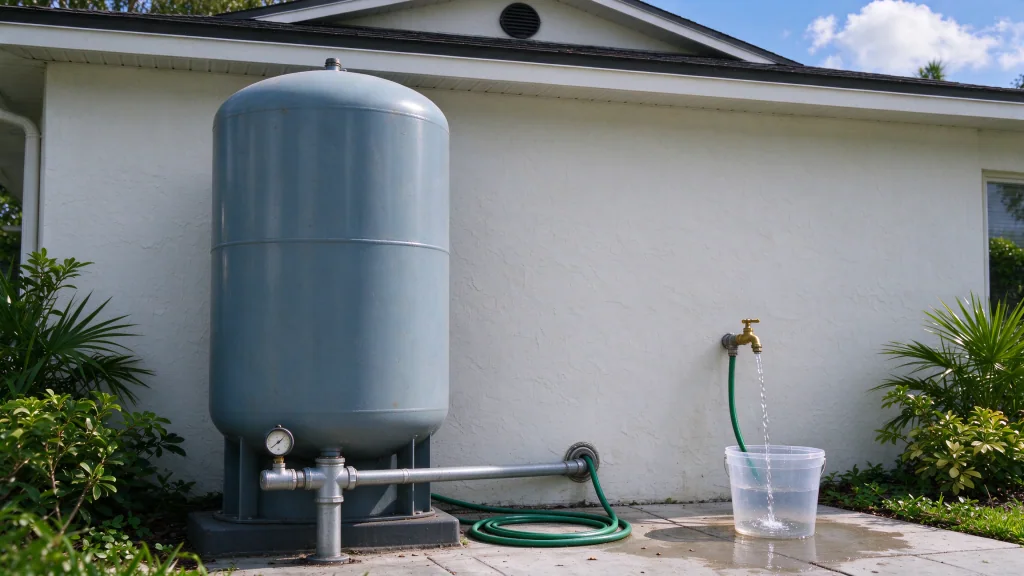
A pressure reading does not tell the whole delivery story
Coastal Palm Bay Well Pump Repair uses pressure and flow as separate observations because they answer different questions. Pressure describes the condition at the gauge or test point. Flow describes the volume moving through a point over time. When fixtures are closed, a system may hold pressure even though the path to the house is restricted or the available well supply is limited.
Opening a fixture changes the operating condition. Water must pass through the pump, piping, valves, any connected equipment, and the fixture itself. A restriction along that path can reduce delivery while pressure remains higher on the upstream side. This is why low well water pressure diagnosis should include where and when a reading is taken, rather than relying on a single resting gauge number.
What a restricted delivery path can look like
If one faucet is weak but others work normally, its local valve, supply line, or outlet may be more relevant than the well pump. If all fixtures weaken during combined use, the investigation expands to shared piping and the supply. A partially closed valve, loaded filter, or obstructed pipe can create a greater pressure loss as more water is asked to pass through.
A measurement upstream of the restriction may not reveal what the fixtures receive downstream. Comparing appropriate test points under the same demand helps locate that difference. The sand and sediment guide explains how collected particles can contribute to restrictions. Any connected treatment equipment has a purpose, so do not remove or bypass it simply to chase a stronger faucet stream.
How pump performance relates to pressure and flow
A pump does not supply every possible flow at every possible pressure. Its operating performance depends on the equipment and the conditions it works against, including the water source and delivery path. Asking for more pressure may leave less available delivery under those conditions or may ask for a pressure the pump cannot reach.
The pressure switch settings guide explains why changing control points is not a general cure for weak water. Controls tell the pump when to operate; they do not create a new performance capability. If the motor runs continuously after a setting change, the system may be unable to reach the stopping point. That requires a capability and condition check rather than another adjustment by guesswork.
Tank storage is different from well supply
A pressure tank can deliver some stored water before the pump starts. That can make a short draw feel adequate even when sustained delivery has a problem. Once demand continues, the pump and well must provide the ongoing supply. The tank does not manufacture additional groundwater, and its nominal labeled capacity is different from the water available between control points.
The pressure tank sizing guide explains usable drawdown. The pump or low-yield guide then separates source replenishment from equipment output. If water delivery fades after extended use and returns after a rest, the observation calls for source and equipment measurements. It does not prove that buying a larger tank or motor will solve the limitation.
What a useful diagnostic sequence compares
A technician can begin with the reported symptom, verify the gauge and equipment arrangement, then observe pressure and delivery during a suitable controlled demand. Where the pressure falls matters. How delivery changes over time also matters. A rapid pressure swing and repeated starts suggest a different path from steady motor operation with fading water.
The short cycling guide explains that first pattern. For source concerns, static water level, pumping level, drawdown, and recovery may be needed. For a surface pump, suction integrity can change delivery without a visible leak. The suction leak repair page describes why air entering a dry-looking connection can matter. These checks should be selected for the installed system rather than performed as an indiscriminate list.
Describe the symptom in terms someone can test
Useful descriptions include a shower weakening when another fixture opens, normal flow for a short period followed by a decline, or one fixture remaining weak while nearby ones work. Mention whether the issue affects hot and cold water, irrigation, or the entire property supply. Note recent plumbing work, pressure changes, or new water use.
Observe only what is safely accessible during ordinary use. Do not open electrical equipment or deliberately exhaust the well to reproduce the problem. A well system inspection should connect your observations to measured conditions and explain the proposed repair. The result should address usable delivery at the relevant fixtures, not merely raise a gauge number while the underlying restriction or supply limitation remains.