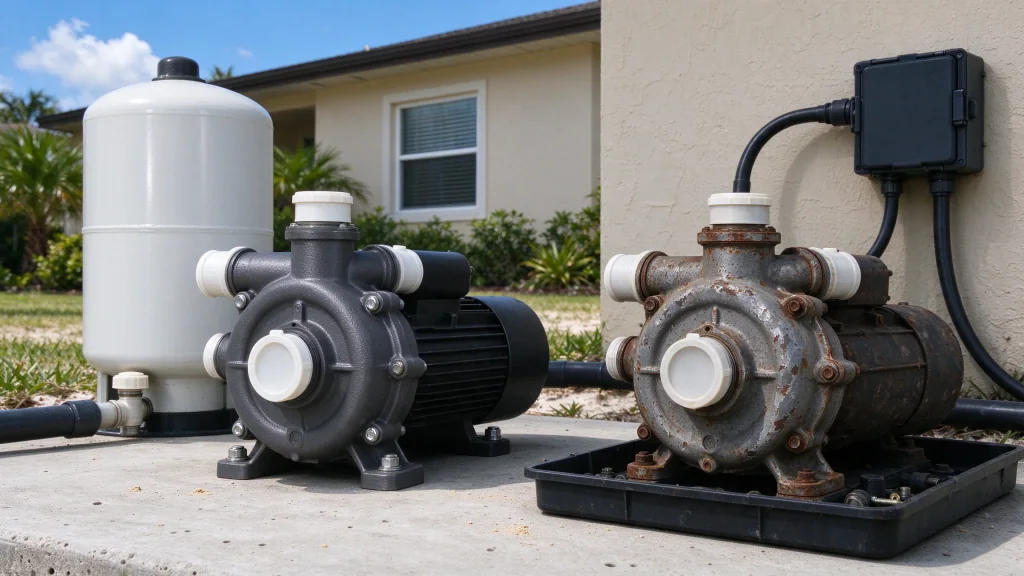
Replacement starts before a pump is pulled
Well pump replacement should begin with diagnosis, equipment identification and a written scope. The contractor then selects compatible equipment, completes the authorized work and checks operation. Coastal Palm Bay Well Pump Repair recommends separating the initial replacement plan from conditions that can only be confirmed after the existing pump and pipe are accessed.
A no-water complaint alone is not proof that the pump has failed. Supply, controls, tank operation, leaks and the well's water availability can produce overlapping symptoms. The repair-or-replace guide helps judge the recommendation before committing to a complete replacement.
Identify what accessible tests establish
For a submersible system, electrical and control checks from accessible equipment may help distinguish a pump or cable issue from an external fault. For a jet pump, prime and the suction path are additional considerations. The test sequence depends on the actual configuration. Ask what has been established and what remains uncertain without accessing the down-well components.
A submersible repair assessment should explain why a pull is needed if one is proposed. A jet pump repair assessment should distinguish a damaged pump from an air leak or lost prime. If declining delivery during sustained use suggests a source limitation, the well-yield guide explains why a new motor may not solve it.
Set the authorization boundary before access work
The written proposal should identify the replacement equipment, planned pipe and cable work, controls, connection work and completion checks. It should say which existing components are expected to remain and what happens if inspection finds them unsuitable. A price for the pump alone is not the same as an installed scope that includes associated materials and labor.
Ask how additional findings will be documented and approved. Stuck equipment, damaged pipe or unknown electrical conditions can change the work, but they should not become an unlimited authorization. The estimate-reading guide shows how to compare exclusions and conditional items. Confirm permit responsibilities where the work includes more than equipment substitution.
Match the duty rather than copying horsepower
The new pump must suit the required flow and pressure, pumping water level, elevation, pipe losses and available source water. The existing nameplate is useful evidence, but duplicating its horsepower does not prove the original selection is correct. Nor does a larger motor increase the aquifer's ability to supply water.
Completed well depth and pump setting are different measurements. The pump may not sit at the bottom, and resting water level is not the same as water level under pumping. The system explanation gives those terms context. Selection should reflect the measured duty and compatible controls, not a universal promise of more pressure from a bigger unit.
Access and installation depend on the system
A submersible replacement involves accessing equipment down the well, with lifting and site access planned for the actual arrangement. A surface jet pump presents different access and connection tasks. In either case, accessible working space and known utility or septic locations help prevent avoidable surprises. Do not remove well components yourself to prepare for the visit.
Reused pipe, cable and connections should be assessed for condition and compatibility rather than presumed acceptable because they previously worked. If the well is opened, sanitary handling and any water-quality follow-up belong in the discussion. The post-repair testing guide explains why clean installation practices and laboratory analysis have related but different purposes.
Ask what the final operating check demonstrates
Completion should include appropriate checks of starts, running behavior, delivered water and stopping or regulation under the tested conditions. Conventional pressure settings and tank operation need compatibility; variable-speed equipment follows its own configuration requirements. The record should identify the installed model and any relevant operating settings.
A brief run does not prove every seasonal demand condition or guarantee lifetime yield. Ask which conditions were observed and what maintenance or follow-up is recommended. Keep the service scope, equipment details and test results together. A future well system inspection can then compare evidence rather than rebuild the equipment history from memory.